
Concrete Services Coverage Across Gungahlin
Our concrete services operate throughout Gungahlin’s established and developing neighbourhoods:
Primary Service Areas:
• Bonner, Crace, Franklin, Harrison, Palmerston, Amaroo
• Gungahlin Town Centre, Taylor, Jacka, Moncrieff, Forde
• Casey, Ngunnawal, Nicholls, Throsby
Service Boundaries:
• North: Extending to Mitchell and Harrison developments
• South: Coverage to Nicholls and Kaleen borders
• East: Service to Gungahlin Drive corridor
• West: Including Horse Park Drive estates
Access Points: Serviced via Gungahlin Drive, Gundaroo Drive, Horse Park Drive, and Flemington Road for efficient equipment transport and material delivery.
Response Times: Quote requests typically assessed within 24-48 hours for Gungahlin properties. Project scheduling accommodates weather-dependent concrete work, with priority booking available for time-sensitive installations before seasonal weather extremes.
All projects comply with ACT planning regulations and local council requirements specific to Gungahlin’s designated zones.

Why Gungahlin's Concrete Requirements Differ
Gungahlin’s geological and climatic conditions create specific concrete challenges absent in other Canberra suburbs.
Reactive Clay Soil Considerations
Temperature Extreme Impacts
Local Development Patterns
Concrete Solutions Matching Gungahlin Lifestyles
Driveways and Driveway Extensions
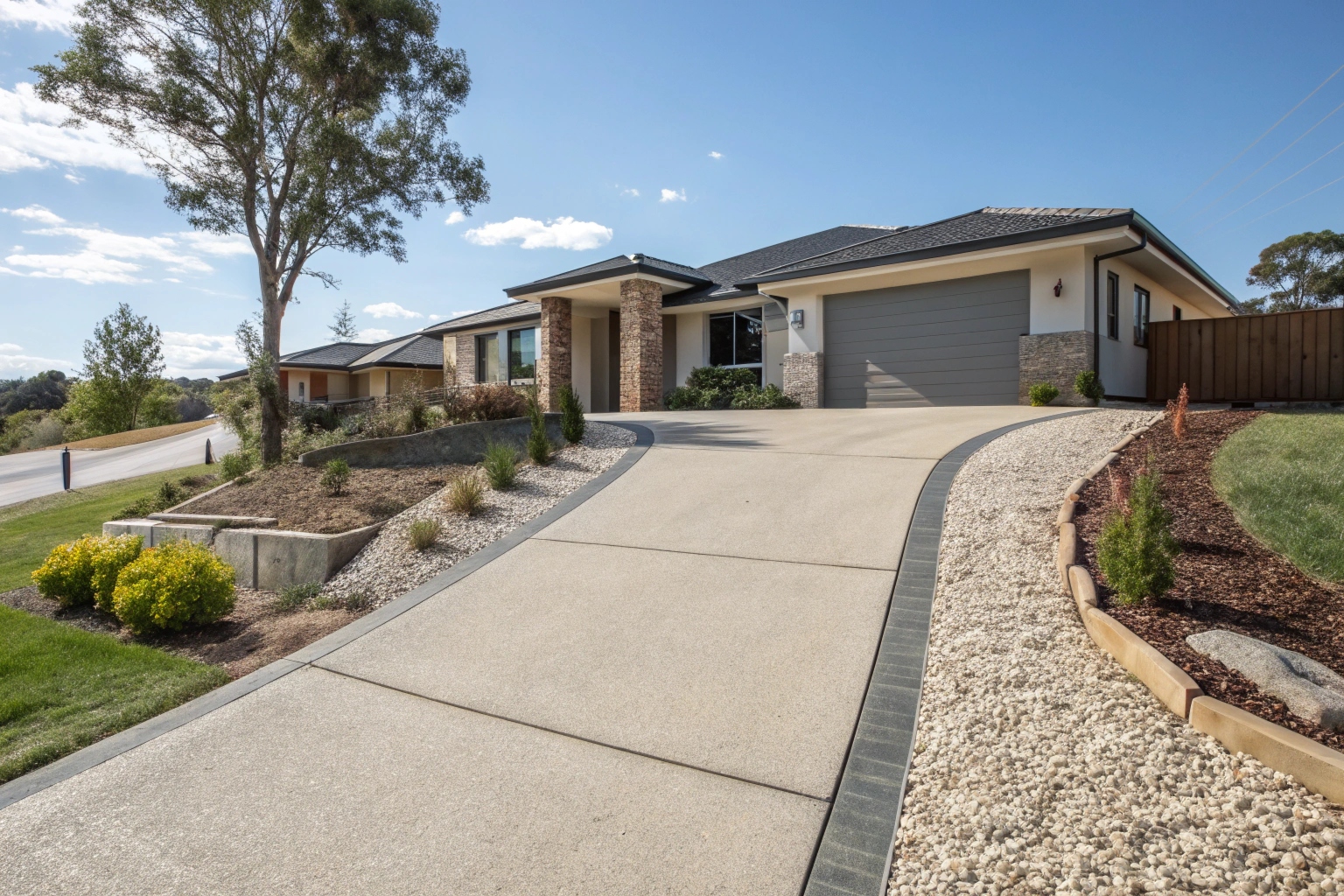
Multi-vehicle households throughout Gungahlin require driveways accommodating 2-3 cars. Properties in Bonner, Franklin, and Harrison frequently need extensions beyond original single-car configurations. Frost-resistant concrete mixes prevent the surface spalling common in Canberra’s winter conditions, while proper reinforcement mesh placement addresses clay soil movement beneath the surface.
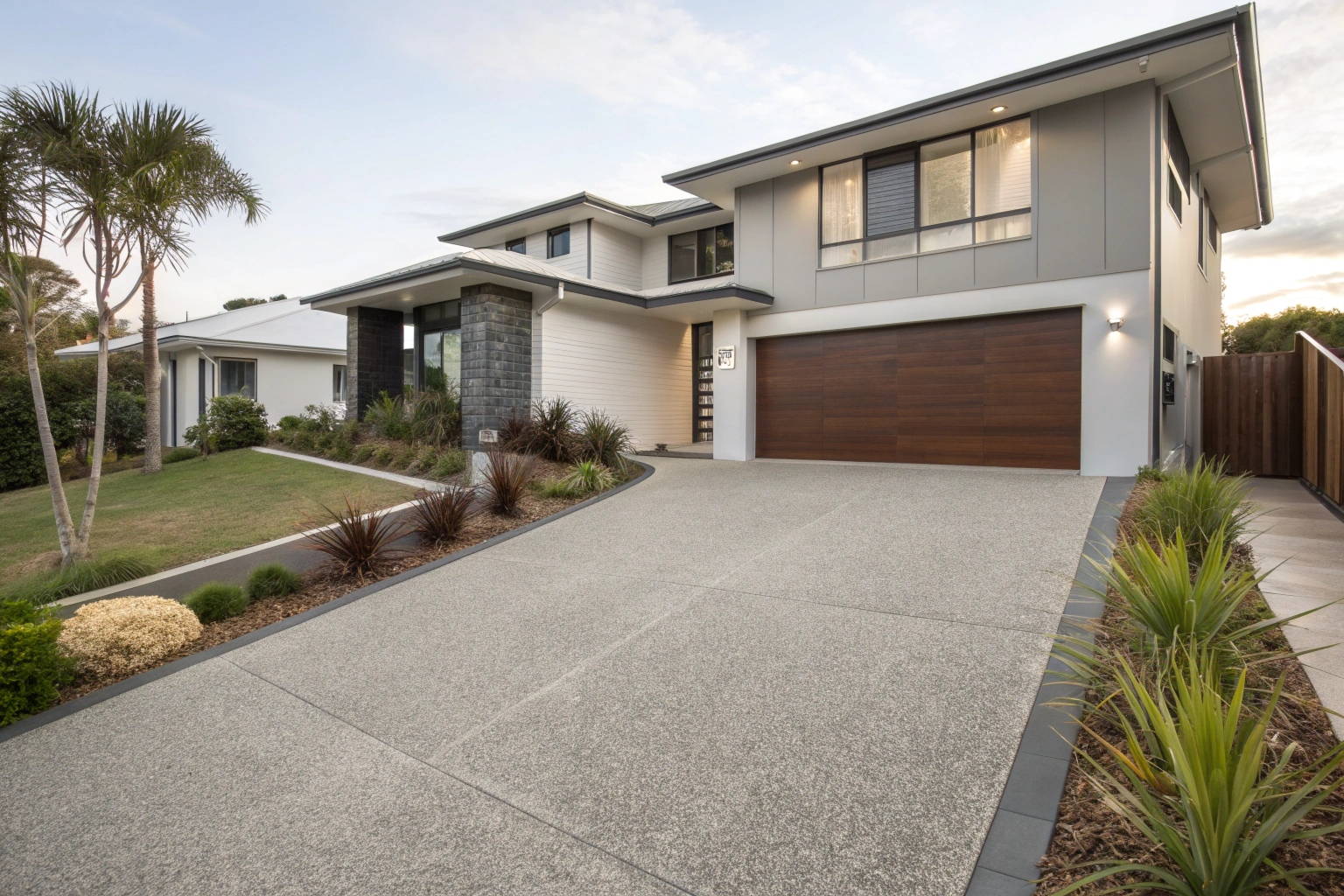
Exposed aggregate finishes suit modern home designs prevalent across Gungahlin estates. These surfaces provide slip resistance during icy conditions while maintaining aesthetic appeal compatible with contemporary architecture.
Outdoor Entertaining Areas and Patios
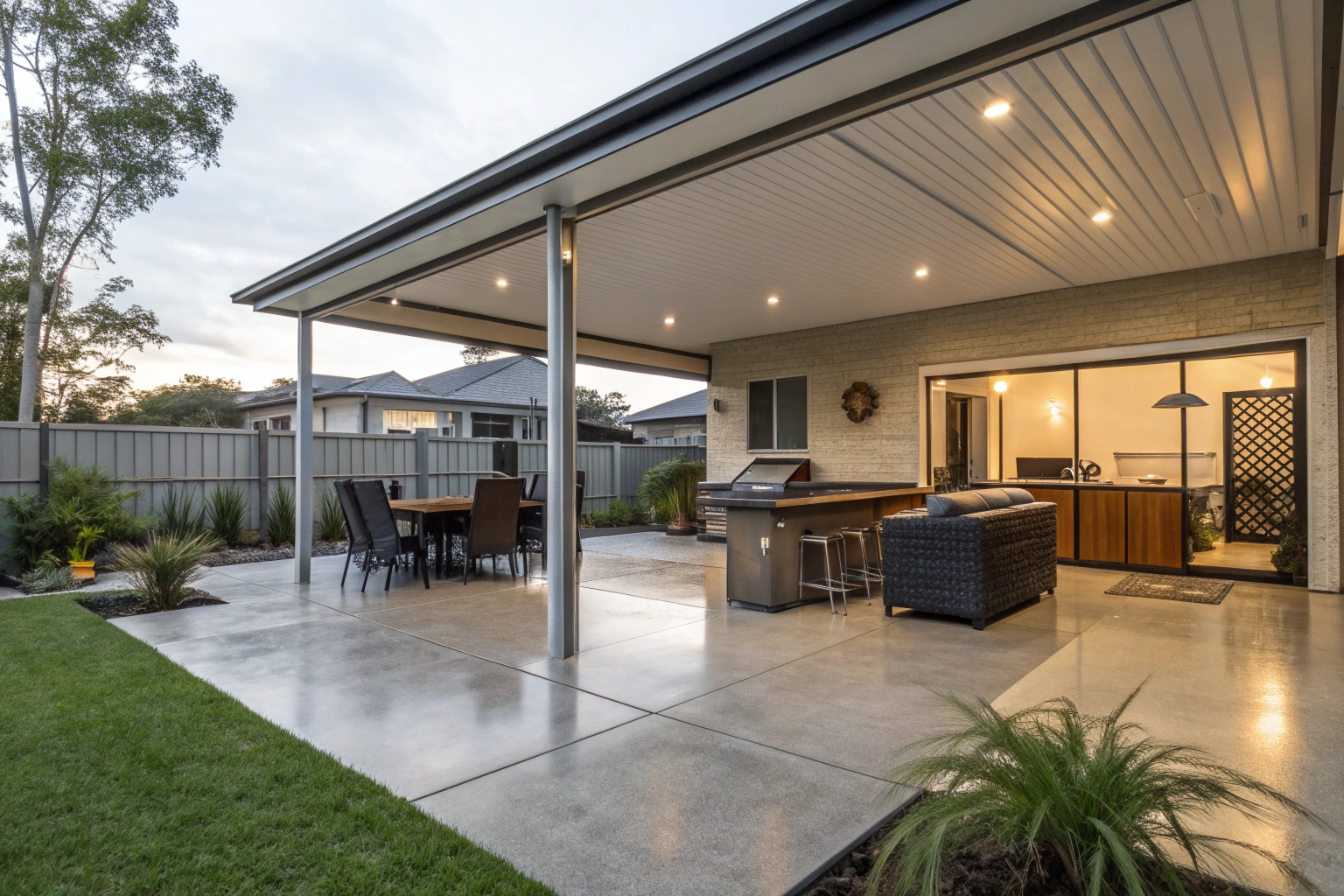
Government workforce residents prioritise outdoor spaces for family gatherings and BBQ entertaining. Polished concrete patios and alfresco areas create year-round functional spaces that handle temperature extremes without cracking.
Covered outdoor area slabs require drainage consideration—water pooling leads to freeze damage during Gungahlin’s frost season. Proper fall angles and drainage integration prevent standing water accumulation.
House Slabs and Granny Flat Foundations
The ACT’s dual occupancy provisions drive granny flat construction across Gungahlin. Adult children returning home and aging parents moving in require additional dwelling foundations engineered for local soil conditions.
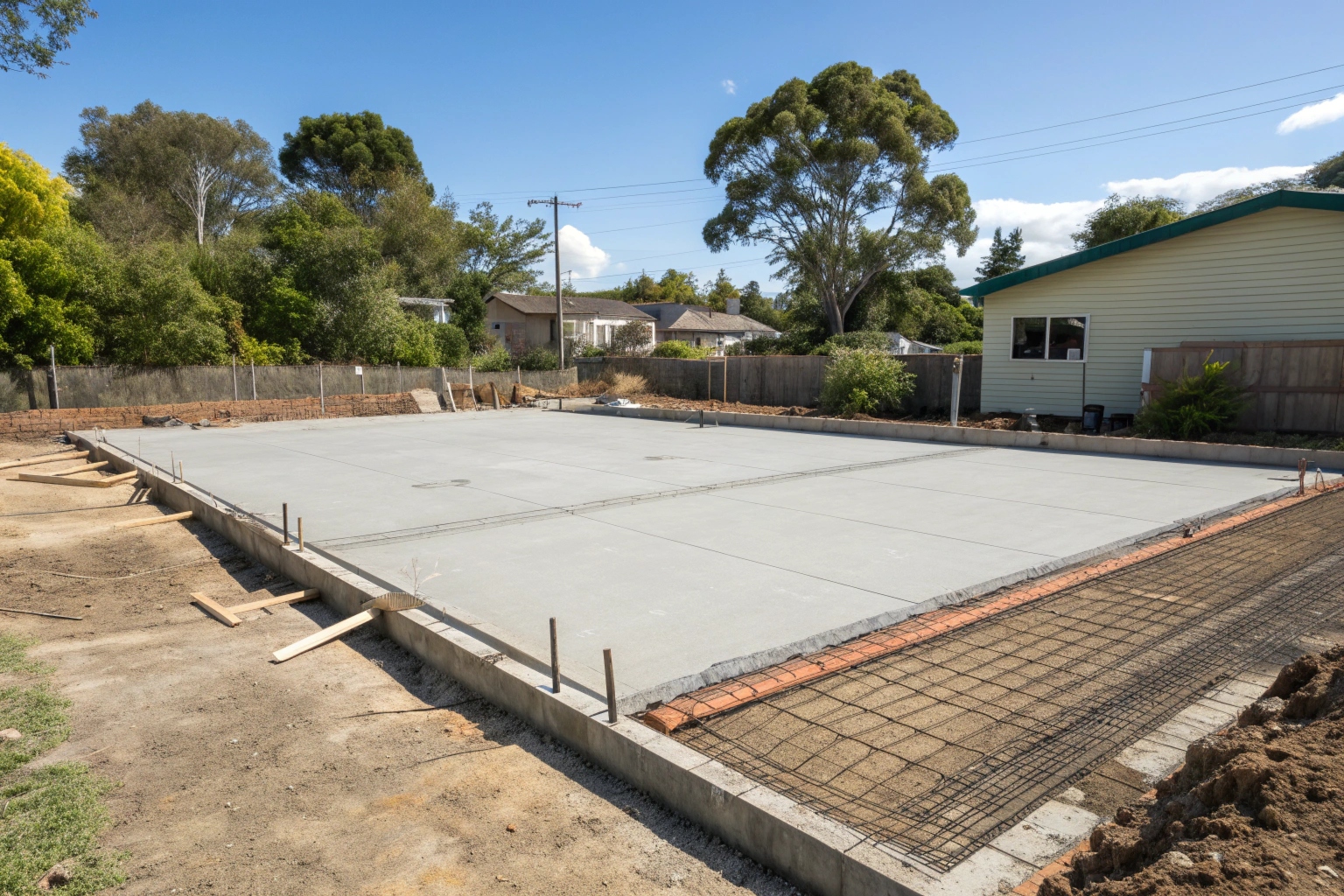
New house slabs in developing areas like Throsby and Jacka demand soil testing and classification before concrete specifications can be determined. Class H soil locations require deeper edge beams and additional reinforcement compared to Class M soil sites. Vapour barriers prevent moisture migration through slab surfaces—essential for internal flooring installations.
Each slab project accounts for specific site soil reports and engineering requirements mandated by ACT building regulations.

Addressing Gungahlin's Unique Property Conditions
Sloped Block Solutions
Gungahlin’s topography includes numerous sloped residential blocks, particularly in Harrison, Jacka, and areas bordering Horse Park Drive. Sloped sites require retaining wall integration with concrete driveways and patio areas. Water runoff management becomes critical—improper drainage creates erosion issues and undermines concrete foundations.
Terraced entertaining areas transform challenging slopes into functional outdoor spaces. These installations require engineered solutions accounting for soil stability, drainage paths, and structural load distribution across elevation changes.
New Development Concrete Requirements
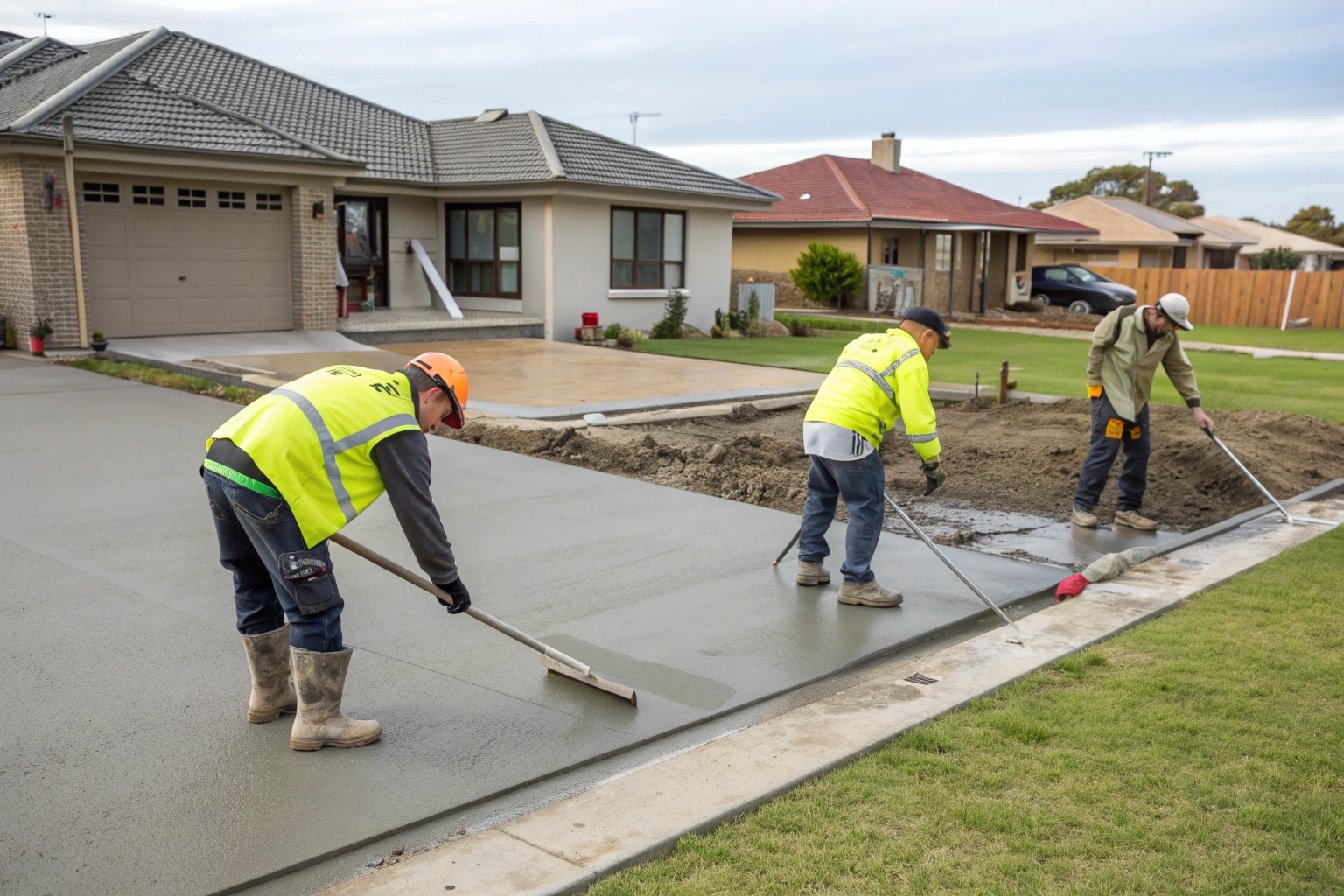
Properties in recently completed estates—Throsby, Strathnairn, Taylor—often lack established drainage patterns. Stormwater systems may still be settling, affecting how concrete slabs and driveways interact with water flow. Early-stage development areas require additional attention to subgrade preparation and temporary drainage solutions until surrounding infrastructure stabilises.
Builder-installed concrete in new homes sometimes requires remediation or replacement within 3-5 years when minimum-specification materials meet Gungahlin’s demanding conditions. Homeowners upgrading from builder-grade concrete seek frost-resistant, properly reinforced replacements designed for long-term durability.
Established Area Renovation Needs
Older Gungahlin neighbourhoods—Palmerston, Amaroo, Nicholls—contain properties with original 1990s-2000s concrete showing weather-related deterioration. Frost damage, surface spalling, and crack propagation from soil movement create replacement demand among established homeowners.
Renovation projects often involve matching new concrete to existing house aesthetics while implementing modern climate-resistant specifications. Heritage considerations don’t apply in Gungahlin given the suburb’s recent development timeline, allowing contemporary concrete solutions without architectural restriction concerns.
Access constraints in established areas with mature landscaping require careful equipment planning and property protection measures during installation.
Selecting Concrete Finishes for Modern Gungahlin Homes
Exposed Aggregate for Contemporary Designs
Exposed aggregate concrete complements the modern architectural styles dominating Gungahlin’s residential developments. This finish provides slip resistance during frost conditions while delivering visual appeal matching contemporary home designs. Natural stone aggregates sourced for Canberra conditions withstand temperature cycling without surface degradation.
The textured surface prevents ice accumulation compared to smooth concrete finishes—a practical consideration during Gungahlin’s winter months when morning frost creates hazardous smooth surfaces.
Polished Concrete for Alfresco Areas
Government workforce households prioritising outdoor entertaining favour polished concrete for covered patio spaces. This finish creates seamless indoor-outdoor flow while maintaining durability under furniture placement and regular use. Sealed polished concrete resists moisture penetration, preventing the freeze-thaw damage that affects unsealed surfaces.
The low-maintenance characteristics suit time-poor professionals seeking quality outdoor spaces without ongoing upkeep demands.
Stamped and Decorative Concrete Options
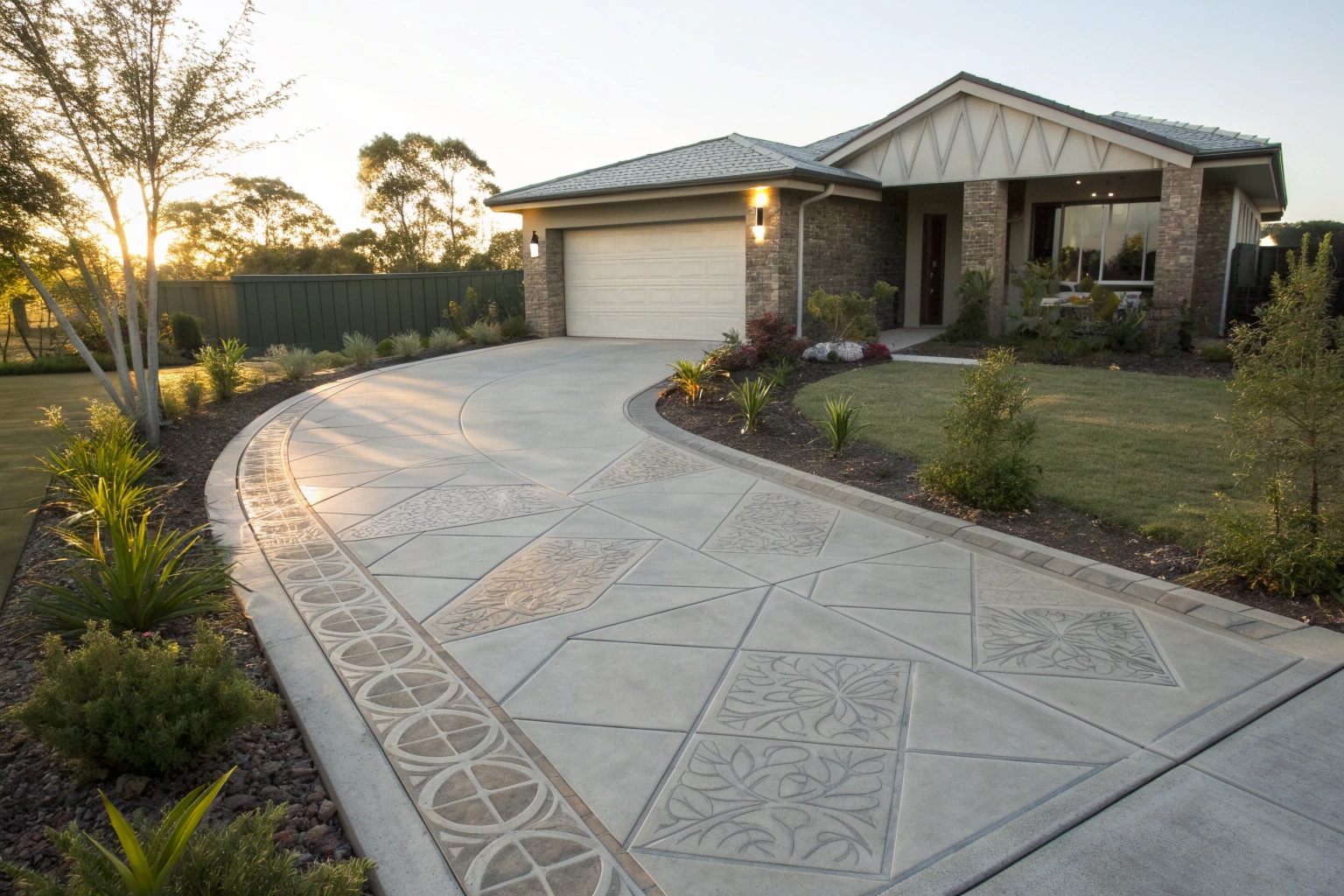
Stamped concrete patterns replicating stone or tile offer aesthetic variety for driveways and pathways. These finishes require proper sealing in Gungahlin’s climate—UV exposure and temperature extremes break down inadequate sealers within 2-3 years.
Decorative concrete with colour integration maintains appearance longer than surface-applied tints, which fade under Canberra’s intense summer sun exposure. Colour-matched concrete repairs blend seamlessly compared to attempting repairs on surface-coloured installations.
Standard Broom Finish Applications
Functional areas like garage approaches, side access paths, and utility zones benefit from cost-effective broom finishes. This practical surface provides adequate traction and durability without decorative finish expenses where aesthetics hold lower priority.
Common Concrete Questions from Gungahlin Homeowners (FAQs)
Concrete reaches initial set within 24-48 hours, allowing light foot traffic. Full cure strength develops over 28 days, though Gungahlin’s temperature extremes affect this timeline. Winter installations require longer protection periods—frost during early curing stages compromises final strength. Summer pours in 35°C+ conditions need extended moisture retention to prevent rapid water loss that weakens the concrete matrix.
Vehicle traffic should wait minimum 7 days, with heavy vehicles delayed until 14+ days for optimal strength development.
Yes. Gungahlin’s 47-degree annual temperature range creates significant expansion and contraction in concrete slabs. Expansion joints prevent random cracking by providing controlled separation points where movement can occur safely. Joint spacing depends on slab thickness and area—typically every 3-4 meters for residential driveways and patios.
Properties on reactive clay soils benefit from additional control joints addressing both temperature movement and soil-induced stress.
Minimum 100mm thickness for standard residential driveways, with 125-150mm recommended for areas accommodating heavy vehicles or trailers. Clay soil locations may require thicker edges (150-200mm) to resist soil movement forces.
Reinforcement mesh (SL72 or F72) should be positioned in the upper third of the slab—not resting on base material where it provides minimal structural benefit.
Yes, with temperature monitoring and protection measures. Pours should occur during warmer daylight hours, with overnight frost protection using insulated blankets if temperatures drop below 5°C. Concrete containing accelerators helps achieve adequate strength before frost exposure, though summer and autumn remain optimal installation seasons.
Get Your Gungahlin Concrete Quote
Concrete projects in Gungahlin require understanding local soil conditions, climate impacts, and ACT regulatory requirements. Each property presents different challenges—from reactive clay soils in newer developments to frost-damaged surfaces in established areas.
Quote requests receive assessment within 24-48 hours. Site evaluations account for soil type, drainage patterns, access constraints, and project-specific requirements affecting installation approach and material specifications.
Project Information Needed:
• Property location and site conditions
• Concrete type required (driveway, patio, slab, pathway)
• Approximate area measurements
• Preferred finish (exposed aggregate, polished, stamped, standard)
• Timeline considerations and weather constraints
Free quotes include material specifications, reinforcement details, installation timeline, and warranty information. All pricing reflects concrete mixes and construction methods engineered for Gungahlin’s specific conditions—not generic solutions that fail under local climate stress.
Projects comply with ACT planning regulations, with permit coordination available for installations requiring development approval.
Contact Us:
• Phone: (02) 6130 0783
• Email: adort48@gmail.com
• Online: concretingservicescanberra.com.au/contact-us
